Ditching the Dream: Why Young Indian Americans Are Walking Away From Silicon Valley
There's a version of this story that every desi kid knows by heart. You ace your SATs, pick a STEM major, land at Google or Microsoft or some buzzy startup in the Bay Area, and spend the next decade collecting RSUs and explaining to your relatives at Diwali what exactly a "product manager" does. It's not just a career path — it's practically a cultural institution.
So what happens when you decide you don't want it anymore?
Across the US, a quiet but real shift is underway. Young Indian Americans — many of them children of the engineers and doctors who immigrated in the '80s and '90s — are stepping off the conveyor belt. Some are launching businesses that have nothing to do with software. Others are making art, opening restaurants, going into social work, or just... taking a breath and figuring out what they actually want. And almost all of them are doing it while navigating the very specific weight of disappointing — or at least confusing — the people who sacrificed everything to give them that opportunity in the first place.
The Setup
To understand the exodus, you have to understand the original deal. First-generation Indian immigrants often came to America with credentials, ambition, and a very pragmatic relationship with work. A job wasn't a passion project — it was a lifeline, a status signal, and a way to make the whole immigration gamble worth it. Engineering and medicine weren't just respected; they were considered the only legitimate answers to the question of what you'd do with your life.
That logic made sense in its context. But their kids grew up American — watching The Social Network, scrolling Instagram, seeing peers build brands and audiences and companies that looked nothing like a cubicle in Cupertino. The cultural messaging they absorbed was fundamentally different: follow your passion, disrupt industries, build something meaningful.
The collision between those two worldviews is playing out right now, in apartments and family group chats across the country.
What They're Leaving Behind
Priya, 29, spent three years at a mid-size tech company in Seattle before quitting to launch a South Asian wedding stationery brand. "I was making good money, I had great benefits, and I was miserable," she says. "Not dramatically miserable — just quietly, persistently miserable. Like I was living someone else's life."
The financial risk was real. So was the family reaction. "My mom cried. Not because she thought I'd fail, but because she genuinely couldn't understand why I'd walk away from something stable. She'd spent her whole career chasing stability. To her, I was throwing it away."
That tension — between security and meaning, between gratitude and self-determination — comes up constantly in conversations with young desi career-switchers. There's a specific guilt that comes with having immigrant parents: the sense that your dissatisfaction is, somehow, ungrateful. That wanting more than a good salary is a luxury your family paid for and you're now wasting.
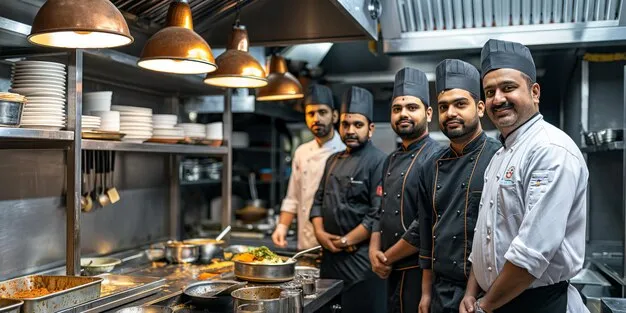
Raj, 32, left a software engineering role at a well-known Bay Area firm to go to culinary school and eventually open a modern Indian street food spot in Chicago. He describes the moment he told his father as "the most uncomfortable dinner of my life." His dad, a civil engineer who immigrated from Gujarat in the early '90s, didn't yell. He just went quiet. "That was almost worse," Raj says.
What They're Building
Here's the thing, though: a lot of these people are building genuinely impressive things. And they're doing it with the same intensity and work ethic that their parents brought to their own careers — just pointed in different directions.
The desi entrepreneurship wave isn't new, but its shape is changing. Where previous generations of Indian American business owners often gravitated toward franchises, motels, or tech startups, this cohort is showing up in food, fashion, media, wellness, and the arts. They're launching Substack newsletters about South Asian identity, opening yoga studios that center Ayurvedic principles, creating clothing lines that blend Indian textiles with streetwear aesthetics. Some are going into community organizing or education reform.
What many of them share is a desire to build something that feels connected to who they actually are — not just what they were told to be.
Meera, 27, left a marketing job at a major tech company to co-found a mental health platform specifically for South Asian women. "There was this moment where I realized I was spending all my energy making someone else's product better," she says. "And I thought — what if I put that energy into something that actually needs to exist?"
The Parents Are Coming Around. Slowly.
Not every family story ends in conflict. Some parents, after an initial period of alarm, have come around — especially when they see their kids succeeding on their own terms. Priya says her mom is now her biggest cheerleader and occasionally models stationery for her Instagram. Raj's dad visited the restaurant recently and, according to Raj, "ate three servings and didn't say anything critical, which for him is basically a standing ovation."
There's also a generational shift happening within the immigrant parent community itself. Many first-gen Indians who spent decades in corporate America are now retiring and quietly wondering if the trade-offs were worth it. Some are watching their kids take risks they never allowed themselves and feeling something that looks a lot like vicarious pride.
The Bigger Picture
This isn't just a personal story — it's a cultural one. The Indian American community has long been associated with a very particular brand of ambition: disciplined, credential-focused, economically oriented. That identity has been both a source of pride and a kind of trap.
What's happening now is a renegotiation. Second-generation desis are asking what Indian American success actually looks like when you get to define it yourself. The answers are messier, more varied, and honestly more interesting than the original template.
The brain drain from tech is real. But what's being built in its wake — the restaurants, the brands, the platforms, the art — might end up being the more enduring legacy. Not the stories their parents told them to write, but the ones they were always meant to tell.
And maybe that's the most desi thing of all: taking what you were given and making something unexpected out of it.