Chai, Chaat, and the American Table: How Indian Food Stopped Being 'Ethnic' and Started Being Everywhere
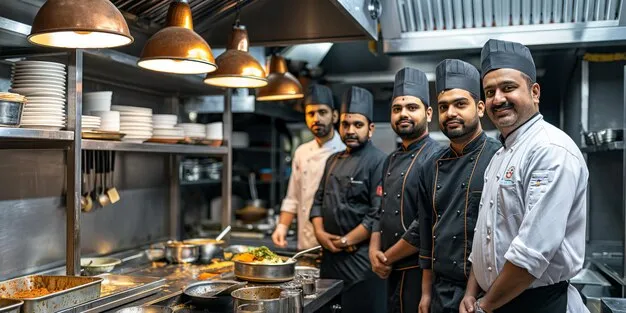
Photo: Indian chef plating contemporary South Asian cuisine in modern restaurant kitchen, via img.freepik.com
Somewhere between the turmeric latte explosion of 2015 and the moment Trader Joe's started stocking chaat masala in the international aisle, something shifted in the American relationship with Indian food. It didn't happen overnight. It didn't come with a press release. But if you pay attention to where Americans are eating, what food media is celebrating, and which chefs are suddenly on every magazine cover, the evidence is pretty hard to miss.
Indian food has arrived. The question worth asking — especially for those of us who grew up watching our school lunches get wrinkled noses — is: what took so long, and what does this moment actually mean?
From Buffet to Buzzworthy
Let's be honest about where we started. For most of the 20th century, Indian food in America existed in a specific, somewhat limited context. There was the Indian restaurant in every mid-sized American city — usually family-owned, usually featuring a lunch buffet, usually decorated with the same framed Taj Mahal print — that served a reliable rotation of tikka masala, saag paneer, and naan. It was beloved, but it was also cordoned off. "Indian food" was a category you visited, not a cuisine that lived in your everyday rotation.
That started to crack around the mid-2010s, when a confluence of forces — the rise of food media, the influence of platforms like Instagram and YouTube, a more diverse generation of American eaters, and frankly, a critical mass of second-generation South Asian chefs who'd trained in serious kitchens and had something to say — began pulling Indian cuisine out of its niche.
"My parents ran a restaurant for 20 years and worked themselves to the bone," says one second-generation Indian-American chef based in Chicago who now runs a contemporary South Asian tasting menu. "What I'm doing isn't that different from what they did. But the culture finally caught up to what they were offering."
The Chef Moment
If there's a single thread that connects Indian food's mainstream breakthrough, it runs through the chefs. Not the buffet operators, as essential as they were to building the foundation — but the culinary school graduates and restaurant-world veterans who started applying serious technique and personal narrative to South Asian flavors.
Chefs like Maneet Chauhan, who became a household name through Food Network and her Nashville restaurants, or Chintan Pandya, whose New York restaurant Dhamaka was hailed by critics as a revelation, didn't just cook Indian food — they contextualized it. They told stories about regional specificity, about the difference between a Tamil Nadu dish and a Lucknowi one, about the way food carries memory and migration. They pushed back against the flattening of a massively diverse cuisine into a handful of greatest hits.
And food media ate it up. The James Beard Foundation, long criticized for its lack of diversity in nominations and awards, has in recent years spotlighted South Asian chefs with increasing frequency. Eater, Bon Appétit, and the New York Times food section have all run major features on Indian regional cuisines that, a decade ago, would've been considered too niche for a mainstream American readership.
The Ingredient Invasion
You can also trace the shift through grocery store shelves, which are basically a real-time map of what American culture is absorbing. Turmeric went from "that yellow spice in curry" to a wellness industry darling that ended up in everything from cold-pressed juices to face masks. Ghee got rebranded as a health food and started appearing next to the coconut oil at Whole Foods. Cardamom crept into American baking. Tamarind showed up in cocktail menus.
Some of this was appropriation-adjacent — turmeric "golden milk" being sold at premium prices in contexts that erased its South Asian origins entirely. That conversation is real and worth having. But it also signals something genuine: American palates have genuinely expanded, and flavors that once seemed intimidating or foreign are now part of the everyday flavor vocabulary for a significant chunk of the population.
The chaat snack category is particularly telling. What was once exclusively a street food eaten by desis at Indian grocery store food courts is now showing up on gastropub menus, in Trader Joe's frozen sections, and as inspiration for fusion dishes at non-Indian restaurants. When a cuisine starts influencing other cuisines, that's a different kind of integration.
What It Actually Means
Here's where it gets complicated — and where the food story starts to become a culture story.
Food acceptance has historically been a leading indicator of broader cultural acceptance for immigrant communities in America. Italian food went mainstream decades before Italian-Americans stopped being the targets of ethnic discrimination. Chinese food became a beloved American institution while anti-Asian sentiment remained a persistent reality. The journey from "exotic" to "beloved" in the kitchen doesn't automatically translate to belonging in other spheres of life.
For Indian-Americans, the culinary moment is genuinely exciting, but it comes with a kind of ambivalence that's hard to fully articulate. There's pride — absolutely — in seeing a cuisine that many of us grew up defending to skeptical classmates finally getting its flowers. But there's also a certain irony in watching the same food that got you mocked in middle school become the hottest reservation in town.
"I used to hide my lunch in fifth grade," admits one Indian-American food writer based in New York. "Now I write about those exact same dishes for a major publication and people tell me it sounds incredible. The food didn't change. Something else did."
What changed, arguably, is America's relationship with difference itself — or at least, certain kinds of difference, in certain contexts. Food is often the safest entry point. It's pleasure-based, low-stakes, non-threatening. Loving someone's food is easier than confronting your assumptions about their culture, their immigration status, or their place in the national story.
The Table Is Bigger, But Is It More Welcoming?
None of this is to be cynical about the moment. The rise of Indian cuisine in American food culture is genuinely meaningful — for the chefs getting recognition they've long deserved, for the restaurant owners building generational wealth, for the second-generation kids who no longer have to explain what dal is to their friends.
But the most honest read of this cultural shift is probably the most nuanced one: food is a bridge, not a destination. The fact that Americans are lining up for dosas and debating the merits of different regional biryanis is a real and positive development. What it means about deeper acceptance — of Indian immigrants, of South Asian identity, of the full complexity of the culture those dishes come from — is still being written.
At Andekha, we're interested in the stories behind the stories. The chaat on the menu is delicious. The conversation about what it means to put it there is even more interesting.