Downward Dog, Upward Profits: Who Really Owns Yoga in America?
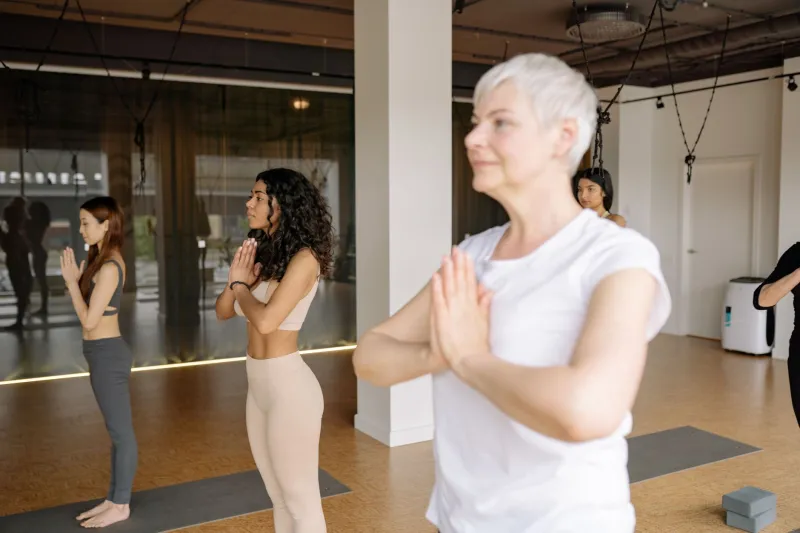
Walk into any mid-sized American city on a Tuesday morning and you'll find at least three studios offering hot yoga, goat yoga, yoga with wine, yoga with dogs, or some combination thereof. The instructors will likely be white. The Sanskrit terms will be mispronounced but enthusiastically delivered. The playlist might include a Rihanna remix. And somewhere, in the back of a studio that smells like eucalyptus and ambition, someone is charging $34 for a single class built on a spiritual tradition that has existed for over five thousand years.
This is the wellness industry's relationship with Indian spiritual practice in 2024 — lucrative, complicated, and almost impossible to talk about without someone getting defensive.
The Numbers Don't Lie
Approximately 36 million Americans practice yoga. The U.S. wellness market, which includes Ayurvedic products, meditation apps, and related practices, is worth hundreds of billions of dollars. Indian spiritual philosophy — repackaged, rebranded, and frequently stripped of its religious context — is embedded in American consumer culture in ways that range from genuinely meaningful to genuinely absurd.
Ashwagandha is in your local CVS. "Namaste" is on bumper stickers. "Karma" has been adopted so broadly it now appears in Taylor Swift lyrics and insurance commercials. Chakras show up in children's books.
For many Hindu Americans, this landscape is disorienting at best and enraging at worst. "I grew up being made fun of for the things my grandmother did every morning," says Sunita Krishnamurthy, a Hindu American activist based in Houston. "Now those exact same practices are being sold as luxury wellness products by people who couldn't find India on a map. And they're making a lot of money doing it."
What Gets Lost
The cultural appropriation debate around yoga and Ayurveda often gets flattened into a binary: either everything is fine because "sharing is caring," or nothing is fine because Western wellness has stolen and commodified sacred traditions. The reality is messier and more interesting than either position.
Dr. Anand Pillai, an Ayurvedic practitioner who trained in Kerala and now runs a clinic in New Jersey, draws a careful distinction. "Ayurveda is not just turmeric lattes and face oils. It's a complete medical system — a philosophy of life, digestion, seasonal rhythms, the relationship between body and consciousness. When a wellness brand takes turmeric and calls it 'Ayurvedic,' they're not wrong exactly, but they're presenting one ingredient as if it's the whole picture. It's like selling a single spice and calling it Indian cooking."
The spiritual dimension gets lost even faster. Yoga, in its original context, is one of the six orthodox schools of Hindu philosophy. The physical postures — the asanas that form the backbone of American yoga classes — represent just one of eight limbs described in Patanjali's Yoga Sutras. The breathwork, the ethical principles, the meditation, the path toward self-realization: most of it doesn't make it into the Tuesday morning flow class.
"I don't expect every American doing yoga to become a Hindu philosopher," says Sunita. "But I do think there's a difference between practicing something and profiting from it while erasing where it came from."
The Entrepreneurs Who Stayed in the Room
Not every desi wellness professional is standing outside the industry throwing stones. Many have chosen a different strategy: get in, build something, and do it on their own terms.
Meera Bhat launched an Ayurveda-based skincare line in 2019 that now stocks in over two hundred U.S. retailers. She's deliberate about context. Every product description references the specific Ayurvedic principle it's based on. Her website includes educational content about the tradition's origins. Her Instagram bio reads: "Ayurvedic formulations by an Ayurvedic practitioner. Not a vibe. A science."
"I got tired of watching brands with no connection to the tradition outsell practitioners who actually know what they're talking about," she says. "So I built a brand that leads with knowledge. Some customers just want a nice moisturizer. But a lot of them actually want to understand what they're putting on their face and why. That audience is growing."
Similarly, a new wave of yoga teachers — many of them Hindu American women — are creating spaces that explicitly center the tradition's origins. Classes that include the philosophical context. Studios where the Sanskrit is explained, not just chanted. Practices that acknowledge the living religion these movements come from.
The Harder Question
Here's where it gets genuinely complicated: does mainstream adoption, even imperfect adoption, ultimately help or hurt?
Some Hindu scholars argue that widespread yoga practice, however diluted, has created a generation of Americans with at least a passing familiarity with Indian philosophical concepts — and that this creates openings for deeper engagement. Others counter that surface-level appropriation actually makes deeper understanding harder, because it gives people the illusion of knowing something they don't.
Dr. Pillai lands somewhere in the middle. "I've had patients come to me because they started doing yoga at the gym and got curious about where it came from. That curiosity is real and I take it seriously. The problem isn't that Americans are interested in these practices. The problem is a market structure that rewards the loudest, most simplified version of something over the most accurate one."
Sunita is blunter: "Credit the source. That's where I start. You don't have to convert to Hinduism to acknowledge that this came from somewhere real, from real people, from a living tradition. Just say where it's from. That costs nothing."
The yoga mat in your living room carries more history than the brand tag suggests. Whether you choose to reckon with that — or just keep following the instructor's cues — is, ultimately, its own kind of practice.