Beyond Butter Chicken: The Indian American Chefs Demanding a Seat at the Fine Dining Table
There's a version of the Indian restaurant in America that most people know. Red walls, maybe some brass décor, a laminated menu with photographs, a lunch buffet that's been running since 1994. It fed generations of immigrants and curious college students alike. It was, for a long time, survival food — not in the sense that it wasn't good, but in the sense that it existed to keep a family afloat in a new country, not to win awards.
That version isn't disappearing. But it's getting company.
The New Wave Doesn't Do Buffets
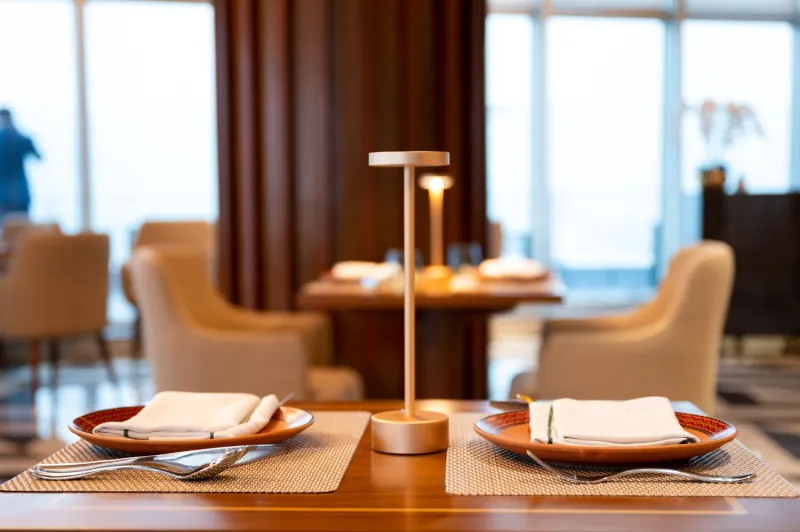
Walk into Rooh in San Francisco, or Semma in New York, or Dhamaka in the East Village, and you're in a different conversation entirely. These aren't your parents' Indian restaurants. The lighting is intentional. The wine list is serious. The menu might feature dishes from regions most Americans couldn't locate on a map — Chettinad, Coorg, the coastal kitchens of Kerala — prepared with the kind of technical precision that food critics usually reserve for French tasting menus.
Chef Chintan Pandya, who helms Dhamaka and has become something of a poster figure for this movement, has spoken openly about his frustration with the version of Indian food that America decided it wanted. "People think Indian food is tikka masala," he's said in interviews. "That's like saying American food is a hot dog." His menu is a direct argument against that flattening — offal dishes, regional street food elevated to prix-fixe territory, flavors that don't apologize for being unfamiliar.
This is the energy defining a new class of Indian American restaurateurs: unapologetic, technically ambitious, and genuinely tired of being categorized as ethnic cuisine rather than simply cuisine.
The Business Case Is Finally There
For a long time, the economics didn't support this ambition. Indian restaurants in America operated on thin margins, kept prices low to compete, and often relied on family labor to survive. Opening a high-concept Indian restaurant with a full bar program, a carefully sourced menu, and a prime Manhattan address was, for most of the 20th century, a fantasy.
The math has changed. The American dining public has changed with it. A generation of food media — from Eater to The New York Times dining section to the entire universe of food content on YouTube and TikTok — has educated eaters in ways that created genuine appetite for regional Indian cooking. When David Chang and Anthony Bourdain started talking seriously about South and Southeast Asian food on television, it moved the needle. When Indian American creators started making food content on their own terms, it moved it further.
Venture capital followed the appetite. Several high-profile Indian restaurant groups have secured significant outside investment in recent years, allowing them to expand in ways that were previously unimaginable for immigrant-owned food businesses. The model is starting to look less like a family restaurant and more like a hospitality brand.
The Prestige Gap Is Real — and Closing
Here's the uncomfortable truth that Indian American chefs have been saying quietly for years and are now saying out loud: the critical establishment has been slow. Painfully, obviously slow.
When Semma opened in 2021 serving South Indian food from Tamil Nadu — the kind of cooking that rarely appears on any American menu, let alone a celebrated one — it got a good review from the Times. But the conversation around it still carried a particular flavor: the slight surprise in the praise, the way reviewers reached for words like "humble" and "vibrant" that they rarely use for French or Italian restaurants of comparable ambition and quality.
"There's a ceiling in how critics talk about our food," says one New York-based chef who asked not to be named. "A French restaurant is 'refined.' An Indian restaurant with the same technique is 'exciting' or 'bold.' Those are different words. They're not neutral."
The Michelin Guide has started to close some of that gap. Several Indian restaurants now hold stars in major US cities, a development that would have been nearly unthinkable fifteen years ago. But the industry knows there's still ground to cover.
The Diaspora Diner Has Opinions
Not everyone in the Indian American community is celebrating unconditionally. Some of the criticism comes from within.
There are real questions about accessibility — about whether fine-dining Indian food, priced at $150 a head, serves the same communities that immigrant-run restaurants were built to feed. There's a version of this story where the new wave gentrifies something that was never broken, just undervalued.
There's also the authenticity debate, which surfaces whenever a chef raised in New Jersey starts reinterpreting dishes from a region of India they visited once. The diaspora has complicated feelings about who gets to tell these stories, and through which filter.
But the chefs pushing this movement tend to have a clear-eyed answer to that critique: they're not replacing anything. They're expanding the frame. The lunch buffet is still there. What they're adding is the possibility that Indian food can live everywhere on the culinary spectrum — from the $12 dosa counter to the $200 tasting menu — the way Italian food has always been allowed to.
The Table Is Being Set
What's happening in the Indian American restaurant industry right now is, at its core, a story about visibility and legitimacy. It's about a community that spent decades feeding America quietly, expertly, and without much recognition — and is now, collectively, deciding that recognition is not optional.
The food was always this good. The ambition was always this big. What changed is who's listening.