Nobody Asks Dad How He's Doing: The Inner Lives of First-Generation Desi Fathers
Photo: James, George Wharton, Public domain, via Wikimedia Commons
Here's a parlor game for every second-generation desi adult I know: describe your father's inner life. Not his sacrifices — those are legendary, cataloged, guilt-inducing. His inner life. What did he want? What scared him? What did the loneliness of that first American winter do to a man who had never once been asked how he felt?
Silence. Every time. We can write novels about our mothers' saris and our grandmothers' kitchens. We have memoirs, streaming shows, and a whole genre of healing Instagram about the desi mother-daughter wound. And the father? The father is a lawn mower that runs on chai and expectations. We know his function. We do not know his story.
The Man Who Was Never the Protagonist
Look at the desi American cultural canon and the pattern is stark. Films and shows about immigrant India in America orbit around women and children: the pressure-cooker daughter, the sacrificing mother, the teen torn between two worlds. When fathers appear, they arrive pre-formed — stern, frugal, emotionally locked, occasionally redeemed in the third act by a single tear.
That caricature isn't just lazy. It's a self-fulfilling portrait. We decided he was unreadable, so we stopped reading.
But talk to first-generation fathers — actually talk to them, past the small talk about your job and the traffic on Route 1 — and a different man emerges. A man who was, say, 32 years old when he landed in Newark with a master's degree, $200, and an accent that made him feel like a child again the moment he opened his mouth. A man who had been somebody back home — a manager, a respected eldest son, a cricketer with a reputation — and became, overnight, an anonymous brown man in an office cubicle in Jersey.
Inventing a Life at 45
The second-gen experience is about becoming someone new. The first-gen father's experience is stranger: he had to become someone new while already being someone — mid-life, mid-ego, without a manual.
Consider what we never ask him about. The humiliation of being passed over for promotions he couldn't name as discrimination without sounding 'difficult.' The way American office culture required a casual male friendship — golf, banter, beers — that his upbringing had simply never taught him. The secret humiliation of a GED prep book, or a community-college evening class, taken at 48 so his credential would finally mean something here. Some of these men retrained, retested, re-proved themselves in their fifties, and told no one, because telling no one is the entire operating system.
The men who talk — usually when their kids are grown and the asking finally comes — describe a strange grief. Grief for the life they'd already built in India, dismantled by their own choice. Grief for a fatherhood practiced across a cultural gap so wide that the love got lost in translation for twenty years. Several told their adult children, in effect, the same thing: I didn't know how to talk to you, so I fixed things instead. The garage full of repaired bicycles. The tuition paid early. The car warmed up before you woke up. That was the vocabulary.
Why the Silence Held
Part of the answer is generational masculinity — men across much of the world in the 1970s and '80s were not raised to narrate their feelings. But part of it is specifically immigrant: in a household where everything is precarious, the father's emotional needs rank last on a list he made himself. Admitting struggle would have meant admitting the whole project was hard. So he performed ease, and the performance calcified into character, and the character calcified into the stereotype we all now consume.
And we, the children, were complicit. Asking Dad how he felt would have cracked the performance, and none of us were ready for what might spill out. Easier to write him off as stoic. Stoic requires nothing from us.
The Asking, Finally
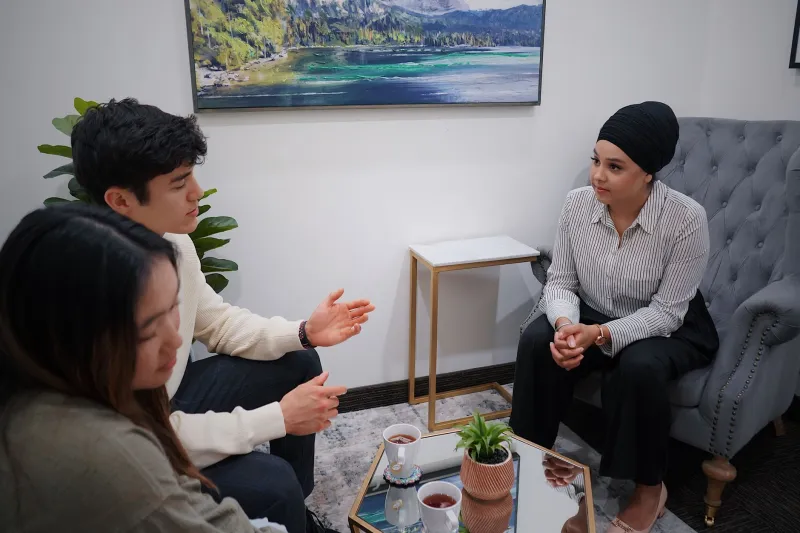
Here's what gives me hope: the asking has started. It happens at Thanksgiving tables and over late-night phone calls, usually initiated by adult daughters armed with therapy vocabulary their fathers find faintly alarming but are willing to sit through. The fathers, it turns out, have been waiting. Not all of them, and not fluently. But when a 68-year-old man from Pune tells his American-born son, forty years late, 'I was very afraid that first year, and I thought if I said it, everything would fall apart' — something repairs in both directions.
The stories of desi America will not be complete until the fathers are in them — not as furniture, not as obstacles, but as men who crossed an ocean and reinvented themselves at an age when reinvention was supposed to be over. Somebody should have asked them decades ago.
The second-best time is now. Ask him. Bring the chai. Expect a long pause. He's been composing the answer since 1989.