Murtis in Studio Apartments: The Quiet Comeback of the 2 AM Prayer
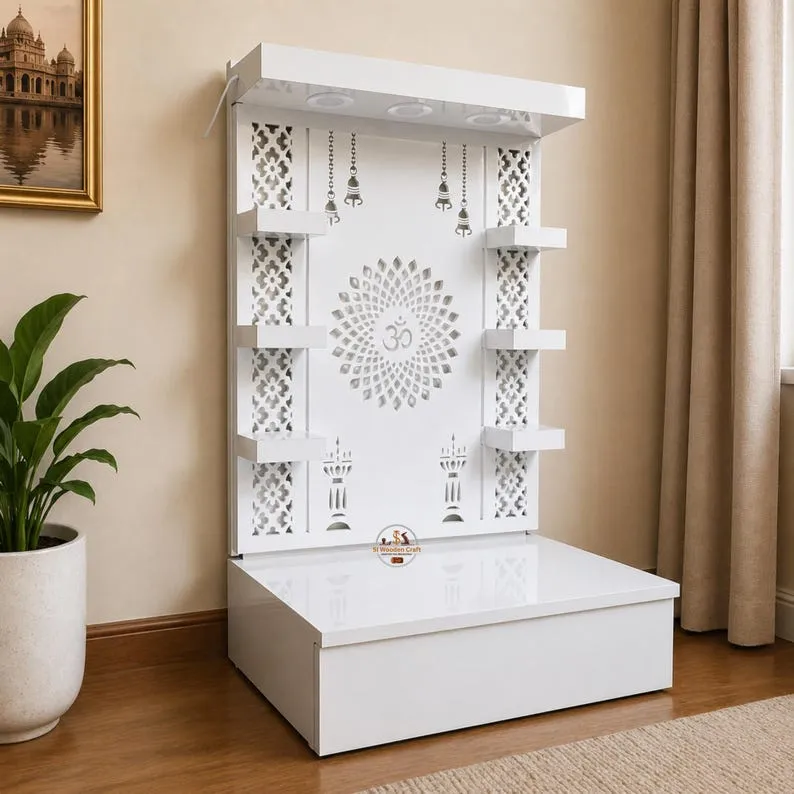
Photo: small home hindu shrine mandir apartment shelf incense, via i.etsystatic.com
The apartment is 400 square feet. The rent is criminal. And yet, on a shelf above a secondhand IKEA dresser, there is a small brass mandir — a tiny Lakshmi, a photo of Guru Nanak, a stick of incense burning at 11 p.m. on a Tuesday because its occupant, a 28-year-old product designer in Bushwick, couldn't sleep again.
She is not alone. Across American cities, second-generation Desis are quietly rebuilding the spiritual infrastructure of their childhood homes, one shelf, one kirtan night, one 2 a.m. aarti at a time.
The Rituals We Rolled Our Eyes At
For decades, the standard immigrant script went something like this: the first generation held onto religion like a lifeline, and the second generation tolerated it — attending Sunday school, sitting through lengthy pujas, counting the minutes until they could leave for college and never look back.
Then came a pandemic, a loneliness epidemic, and an economy that treats stability like a luxury good. Suddenly, the practices once dismissed as "mom stuff" started looking less like obligation and more like technology — ancient, yes, but built for exactly this moment.
"I used to think my nani's morning routine was superstition," says one 26-year-old graduate student in Chicago. "Now I realize she had a mindfulness practice before Silicon Valley trademarked the word."
Kirtan Night, But Make It Gen Z
The most visible expression of this shift is social. On college campuses from Berkeley to Ann Arbor, student-run kirtan nights draw crowds that look more like a house show than a satsang — sneakers off, fairy lights on, someone's Spotify playlist blending bhajans with lo-fi beats. Attendance at Hindu Student Council and Sikh Student Association events has swelled since 2020, organizers say, driven less by parental pressure (there is none, from three time zones away) and more by genuine hunger.
The appeal is part spiritual, part sociological. A kirtan night offers what the American weekend often doesn't: a room where no one is networking, no one is performing, and everyone knows the words. For young professionals navigating open-plan offices and dating apps, that's not nostalgia. That's relief.
The Aesthetics of Ancestry
There's also a material dimension. Instagram and Etsy are full of small-space mandirs designed for renters — minimalist wooden shrines that fit on a bookshelf, diya sets that won't trigger a smoke alarm, brass thalis sourced from vintage dealers in Jersey City. What was once hidden in a basement corner is now curated, photographed, and proudly displayed.
Critics might call it spirituality as decor. But for many, the visibility is the point. Reclaiming a ritual your teenage self found embarrassing is a form of repair — an apology to your parents, issued to your own ceiling at midnight.
Not a Return. A Renegotiation.
Nobody's pretending this is orthodoxy. The mandir shares shelf space with a vinyl collection. The fast is broken with brunch. Many participants describe their relationship with religion as "complicated," "selective," or "under construction."
But maybe that's the story. The first generation practiced to survive displacement. This generation is practicing to survive acceleration. Different reasons, same 2 a.m. incense.
And when a friend texts "kirtan at mine Friday, bring snacks?" — nobody rolls their eyes anymore. They ask if they can bring someone.